Online Credit Card Processing Systems: How it Works
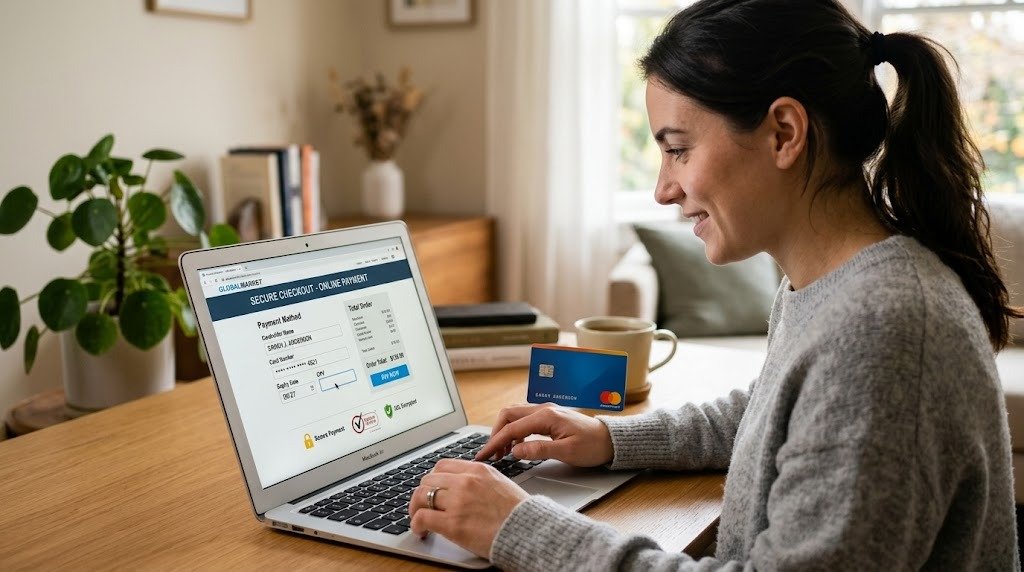
Online credit card processing systems power millions of e-commerce transactions every day. If you’re a business owner, entrepreneur or interested in learning how to accept payments online for your business, then this article is for you.
While there are some security concerns. Online payment systems open up vast new worlds of opportunities. If done correctly, they can increase your sales and please your customers. If done wrong they can expose your business to vulnerabilities and leave money on the table.
In this guide we will cover what happens behind the scenes when you process a credit card transaction online. We’ll go over some of the best practices to keep your transactions secure as well as what you need to do in order to accept those payments. Lastly we’ll touch on some of the latest and greatest payment technologies.
Understanding these fundamentals helps businesses make informed decisions about payment processing while protecting both company assets and customer data.
How Online Credit Card Processing Systems Works
Online credit card payment systems operate through a complex network of interconnected parties that work together to securely transfer funds from buyers to merchants. When a customer enters their card information on a website, the transaction follows a specific pathway that takes just seconds to complete.
The process begins when the customer clicks “pay” and their encrypted payment data travels to the merchant’s payment gateway. This gateway acts as the digital equivalent of a point-of-sale terminal, capturing and formatting the transaction information before sending it to the payment processor. The processor then routes the authorization request through the appropriate card network (Visa, Verve, Mastercard,) to the customer’s issuing bank.
The issuing bank receives the authorization request and performs several checks: account balance verification, fraud detection screening, and spending limit validation. If everything checks out, the bank sends an approval code back through the same pathway. The entire authorization process typically completes within 2-3 seconds.
Settlement happens separately, usually within 24-48 hours. During settlement, the actual money moves from the customer’s account through the banking system to the merchant’s account, minus processing fees.
Key Players in the Payment Ecosystem
The online credit card payment ecosystem involves multiple specialized entities, each playing a critical role in transaction processing and security.
- Payment Gateways serve as the front-end interface between merchants and the payment processing network. Popular gateways like Stripe, PayPal, and Square provide the technology that captures customer payment information and initiates the transaction process. These platforms offer APIs and hosted payment pages that integrate with e-commerce websites.
- Payment Processors handle the technical aspects of routing transaction data between banks and card networks. Companies like First Data (now Fiserv), Chase Paymentech, and Worldpay maintain the infrastructure that connects merchants to the broader financial system.
- Card Networks (Visa, Mastercard, Verve) operate the global payment rails that enable communication between banks worldwide. They set interchange fees, maintain security standards, and provide dispute resolution services.
- Acquiring Banks maintain merchant accounts and assume financial responsibility for transactions. They underwrite merchants, provide funding, and handle chargebacks and disputes.
- Issuing Banks provide credit cards to consumers and make the final authorization decisions on transactions. They also bear the risk of fraud and non-payment.
Security Protocols That Protect Transactions
Modern online credit card payment systems employ multiple layers of security to protect sensitive financial data and prevent fraud.
- Payment Card Industry Data Security Standard (PCI DSS) compliance: forms the foundation of payment security. This comprehensive framework requires merchants and service providers to implement specific security measures including network firewalls, encrypted data transmission, secure coding practices, and regular security testing.
- Tokenization: replaces sensitive card numbers with unique tokens that have no value outside the specific transaction context. When customers save their payment information, merchants store tokens instead of actual card numbers, significantly reducing data breach risks.
- 3D Secure authentication: adds an extra verification step for online transactions. Customers may receive SMS codes, use biometric authentication, or answer security questions to confirm their identity before transaction approval.
- SSL/TLS encryption: protects data transmission between browsers and servers. Modern implementations use 256-bit encryption, making intercepted data virtually impossible to decode.
- Machine learning fraud detection: analyzes transaction patterns in real-time, flagging suspicious activities based on factors like spending patterns, geographic locations, device fingerprints, and behavioral biometrics.
Types of Online Payment Methods
The digital payment landscape offers merchants and consumers various options beyond traditional credit card processing.
- Credit and Debit Cards: The most traditional method, powered by global networks like Visa, Mastercard, and American Express, or regional networks like Verve .
- Digital and Mobile Wallets: Payment apps like Apple Pay, Google Pay, and Samsung Pay use tokenization and biometric authentication to process payments through smartphones and smartwatches. These methods often provide enhanced security through device-specific encryption.
- Buy Now, Pay Later (BNPL): services such as Klarna, Afterpay, and Affirm allow customers to split purchases into installments. These services handle the credit risk while providing merchants with immediate payment.
- Direct Bank Transfers: Methods allowing customers make payments from their bank accounts
- Cryptocurrency: Payments through processors like BitPay and CoinGate allow merchants to accept Bitcoin and other digital currencies, with automatic conversion to traditional currency.
Each payment method carries different cost structures, settlement timeframes, and risk profiles, making it essential for merchants to carefully evaluate which options align with their business model and customer preferences.
Choosing the right payment gateway for your needs
The payment gateway acts as the bridge between your business and financial institutions, making the selection process critical for successful online credit card payment processing. Popular options include Stripe, PayPal, Square, and Authorize.Net, each offering distinct advantages depending on business size and requirements. These are the key factors to consider when choosing a payment gateway for your business:
- Transaction fees represent a major consideration, typically ranging from 2.9% to 3.5% per transaction plus fixed fees. High-volume businesses often negotiate better rates, while startups might prioritize gateways with no monthly fees.
- Processing speed affects customer satisfaction directly. Some gateways process payments within seconds, while others may take several minutes. Real-time processing becomes essential for digital products or services requiring instant access upon payment completion.
- Customer support quality varies significantly between providers. 24/7 support with multiple contact channels ensures quick resolution when payment issues arise. The gateway’s reputation for reliability and uptime statistics should influence the decision, as payment processing downtime directly impacts revenue.
Essential security features to look for
When you are setting up online payments, a fast checkout means absolutely nothing if your data gets stolen. A single security breach can ruin your brand’s reputation overnight and cost you thousands in fines. If you want to keep your business and your customers safe, having a non-negotiable, heavy-duty security system isn’t an option,it is a requirement.
- PCI DSS compliance forms the foundation of secure online credit card payment systems. Level 1 compliance represents the highest security standard, required for businesses processing over 6 million transactions annually.The gateway should handle tokenization, replacing sensitive card data with unique tokens that render stolen information useless.
- SSL encryption protects data transmission between customers and payment processors. Look for 256-bit SSL certificates and ensure the gateway maintains current security protocols. Two-factor authentication adds an extra security layer for administrative access to payment systems.
- Fraud detection tools analyze transaction patterns to identify suspicious activity automatically. Machine learning algorithms continuously improve detection accuracy by studying legitimate versus fraudulent transaction characteristics. Real-time monitoring flags unusual spending patterns, geographic inconsistencies, or velocity checks.
- Address Verification Service (AVS) and Card Verification Value (CVV) checks provide additional security layers. These tools verify cardholder information matches billing records, reducing chargebacks and fraudulent transactions. Some gateways offer customizable fraud rules based on specific business risk profiles.
Best Practices for Safe Online Transactions
Establishing robust security protocols during online credit card payment transactions requires attention to several critical factors that protect personal and financial information.
- Strong password creation represents the foundation of secure payment practices, with unique combinations of letters, numbers, and symbols providing the first line of defense against unauthorized access.
- Stop reusing your passwords: Use a random mix of letters and numbers for your shopping accounts. If a hacker guesses one password, you do not want them getting into everything.
- Check your banking app often: Do not wait for your monthly statement. Scroll through your transactions every few days so you can spot and report weird charges right away,
- Turn on extra security codes: Enable two-factor authentication (2FA) on your accounts. Getting a quick text code to approve a login keeps scammers out, even if they know your password.
How to Avoid Payment Scams
Online payment scams continue evolving, making awareness of common tactics essential for safe transactions. Phishing emails often masquerade as legitimate financial institutions, requesting credit card information through convincing but fraudulent communications. Authentic banks never request sensitive information via email or text messages.
Fake merchant websites represent another significant threat, often featuring professional designs that mirror legitimate retailers. Careful examination of website URLs reveals subtle differences in spelling or domain extensions that indicate fraudulent operations. Researching merchant reviews and ratings before making purchases provides valuable insight into legitimacy.
Pressure tactics frequently characterize scam attempts, with fraudulent sellers creating artificial urgency through limited-time offers or expiring deals. Legitimate merchants allow customers adequate time for decision-making without aggressive sales pressure.
Payment method requests often reveal scammer intentions. Legitimate businesses accept standard credit cards and established payment platforms, while scammers prefer wire transfers, gift cards, or cryptocurrency payments that offer fewer consumer protections.
Social media marketplace scams have become increasingly sophisticated, with fake profiles and stolen product images creating convincing but fraudulent storefronts. Direct verification of seller identities and meeting locations for local transactions reduces exposure to these schemes.
Winding Down
At the end of the day, setting up online payments does not have to be overwhelming. Once you get the right players in place and turn on the essential security tools, the system mostly runs itself. Just focus on keeping your customers’ data safe, choosing a gateway that works for your region, and staying on top of your transactions.