How to Apply for Federal Government Jobs in Nigeria

To get a federal government job in Nigeria, you apply through the Federal Civil Service Commission portal or the career page of whichever agency you’re targeting, and it costs you absolutely nothing.
Every year, thousands of qualified Nigerians apply for federal government jobs and never get it, not because the jobs don’t exist, not because they weren’t good enough, but because they didn’t understand how the system works.
This article fixes all of that. What follows is a clear, step-by-step breakdown of how to apply for federal government jobs in Nigeria in 2026, which portals to use, what documents to prepare before you even start, how to write a CV that gets past the first filter, and exactly which errors quietly end applications before any human being ever reads them.
First, Understand How Federal Hiring Actually Works in Nigeria
Before you rush to any portal, you need to understand who hires who.
This is where a lot of people are confused, and confusion leads to wasted applications.
There are two broad categories of federal employment in Nigeria:
The Federal Civil Service covers jobs in ministries, departments, and agencies, places like the Ministry of Health, Ministry of Education, Ministry of Finance, and so on.
The body that manages recruitment into these roles is the Federal Civil Service Commission (FCSC).
Federal Parastatals and Agencies are semi-independent bodies that do their own recruitment. Places like CBN, NNPC, FIRS, NPA, NIMASA, EFCC, Customs, Immigration, each of these runs its own hiring process through its own career portal.
You don’t apply to them through the FCSC.
Why does this matter? Because if you’re trying to get into CBN and you’re sitting on the FCSC portal waiting for a CBN vacancy, you’ll be waiting for something that will never appear there.
Each path is separate. Know which one you’re targeting.
The Documents You Need – Have Everything Ready Before You Start
Nothing is more frustrating than finding a vacancy, opening the portal, and realizing you’re missing something.
Common reasons applicants don’t make the shortlist include missing documents, uploading the wrong file, providing inaccurate information, or applying for more than one position in the same round.
All of that is avoidable.
Get these ready before you start any application:
- SSCE results (WAEC, NECO, or NABTEB) : five credits minimum, including English Language and Mathematics
- University degree certificate: original or certified true copy
- University transcript: official copy with your institution’s stamp
- NYSC discharge certificate (or exemption letter if applicable)
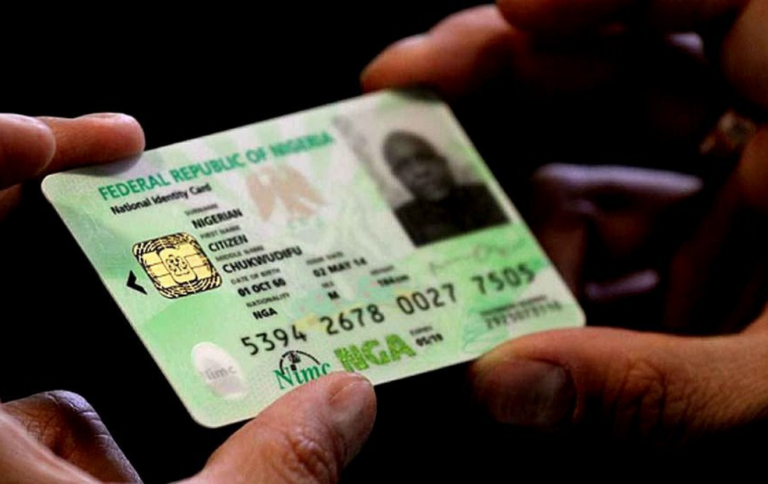
- National Identification Number (NIN) – your NIN slip or NIN card
- BVN (Bank Verification Number) linked to a bank account in your own name only. Never use a relative’s account.
- Birth certificate or age declaration
- State of Origin certificate – from your local government
- Passport photograph – white background, recent, not a selfie
- Professional certificates — ICAN, ACCA, COREN, NBA, whatever applies to you
Your State of Origin matters more than people realize in federal applications.
The federal character principle under Section 14(3) of the Nigerian Constitution structures public sector hiring quotas across all 36 states plus FCT – so your state of origin is an active screening signal, not just biographical data.
Make sure it’s accurate and consistent across all your documents.
Scan everything clearly.
Most portals accept PDF or JPEG. Keep file sizes reasonable – usually under 200KB per document unless the portal specifies otherwise.
Rename your files properly before uploading. “Certificate.jpg” is fine, but “AdaezeMichael_BSc_Cert.pdf” is better and reduces confusion if anything goes wrong on their end.
Common Mistakes That Disqualify Applicants
- Mismatched personal details. Your name, date of birth, state of origin, LGA, and gender on your application MUST match your NIN records exactly. Even a missing middle name can flag you. Harmonise everything with NIN before applying to anything.
- Applying multiple times. Most portals detect duplicate applications by email, phone, NIN, and BVN. If you apply twice (even on different email addresses), both applications get flagged and you risk a permanent ban.
- Over-claiming qualifications. Never list qualifications you don't have. Document verification will catch you – and most federal agencies share a blacklist.
- Using someone else’s bank account. Stipends and salaries go to the applicant’s own BVN-linked account. Third-party accounts cause massive delays or full cancellation.
- Poor document scans. Blurry, low-light, cropped-off, or watermarked scans are rejected. Scan at 300 DPI minimum. If the text isn’t cleanly readable, it gets bounced.
- Wrong document format. Most portals want PDF for certificates and JPG for photos, with size limits. Convert before uploading – don’t let the portal reject you.
- Missing the deadline. Portals do NOT extend deadlines once announced. Last-72-hour traffic crashes sites. Apply in the first week, not the last week.
- Paying agents or middlemen&; Legitimate recruitment is FREE. Paying anyone guarantees you’re being scammed and might also get you blacklisted
How to Apply Through the FCSC Portal (Step by Step)
The Federal Civil Service Commission is the body responsible for hiring qualified Nigerians into federal ministries, departments, and agencies across the country. As of 2026, the FCSC maintains an active recruitment board and continues to advertise vacancies throughout the year depending on ministerial needs.
Here’s exactly how to apply when a vacancy is open:
Step 1 – Check if the portal is open
Go to www.fedcivilservice.gov.ng/page-vacancies to see current openings. Every listed vacancy will show a closing date. If nothing is listed, the portal is between recruitment cycles. Bookmark the page and check weekly – do not rely on WhatsApp forwards to tell you when it opens.
Step 2 – Create your account
Visit recruitment.fedcivilservice.gov.ng and register with a valid email address and phone number. Use an email you actually check. You’ll receive a verification link – check your spam folder if it doesn’t arrive in your inbox within a few minutes.
Step 3 – Complete your bio-data form
Fill in your personal details carefully. This includes your full name exactly as it appears on your documents, date of birth, state of origin, LGA, contact information, and educational history. Do not rush this section. A name spelled differently on your form and your certificate is the kind of thing that gets flagged during document verification.
Step 4 – Select your preferred position
You must make only one application. Submitting multiple applications – even using different accounts – results in automatic disqualification from the entire exercise. Read this again. One application only. Choose carefully.
Step 5 – Upload your documents
Attach your certificates, transcript, NYSC certificate, NIN, passport photograph, and any other required documents in the formats specified. Double-check that each file opens correctly before uploading. A corrupted file that looks fine on your end might upload as blank.
Step 6 – Review and submit
Read through everything before hitting submit. Check your name, check your dates, check your document attachments. Once submitted, most portals do not allow edits. Print your confirmation slip and save the reference number somewhere safe.
Step 7 – Wait and monitor
After the closing date, applications are automatically sorted. Shortlisted candidates receive email and SMS invitations for aptitude tests or interviews. Check both your email and your phone regularly. Sometimes these notifications land in spam.
How to Apply to Parastatals (CBN, NNPC, FIRS, NPA, and Others)
For the higher-paying agencies, the process is similar in structure but runs through each agency’s own platform. Here’s where to go:
| Agency | Career Portal |
| Central Bank of Nigeria | careers.cbn.gov.ng |
| NNPC Limited | careers.nnpcgroup.com |
| FIRS | firs.gov.ng |
| Nigerian Ports Authority | npa.gov.ng |
| NIMASA | nimasa.gov.ng |
| EFCC | efcc.gov.ng |
| Nigerian Customs Service | customs.gov.ng |
| Nigerian Immigration Service | immigration.gov.ng |
The application steps are similar across most of them – create an account, fill your bio-data, upload documents, select roles, and submit.
What changes is the specific requirements and the aptitude test process, which varies by agency.
For CBN and NNPC especially, the competition is so high that the portal sometimes slows down or crashes in the first 24-48 hours after an announcement. Apply early. Not on the last day.
Writing a CV That Actually Works for Federal Job Applications
This is where many candidates quietly lose before the race even starts.
A CV is not a record of everything you have ever done. It is not a biography or a personal statement. It is a targeted sales document with one goal – convince a specific recruiter, at a specific company, to invite you for an interview.
For federal government applications specifically, here’s what your CV needs to include:
- Personal Information – Full name, phone number, email, home address, date of birth, state of origin, LGA, marital status, and NYSC status. Unlike Western CV conventions, Nigerian CVs – especially for federal applications – include personal information like state of origin and LGA because of the federal character principle that structures public sector hiring.
- Education – List your qualifications in reverse chronological order. Degree first, then WAEC/NECO. Include your institution, year of graduation, and your grade or class of degree. Don’t hide a Third Class or Pass – it will come out in document verification anyway. Some agencies accept it for certain roles.
- Work Experience – If you have any, describe what you actually did and what changed because of your work. Not “I was responsible for managing accounts.” More like “Managed 40 client accounts, reducing outstanding debts by 30% within six months.” The difference is enormous.
- Professional Certifications – List them with the issuing body and the year. For FIRS, ICAN or ACCA matters. For engineering roles at NNPC or NPA, COREN registration is often expected.
- References – Nigerian employers routinely call references at the shortlist stage, so include two to three named referees with their full contact details – not “available on request.” Choose people who have directly supervised you, not just people you know.
One more thing: tailor your CV slightly for each agency. If you’re applying to NCC, your technology and telecom coursework should be visible.
If you’re applying to FIRS, your accounting and finance experience should be front and center.
A one-size-fits-all CV is a polite way of saying you didn’t take the application seriously.
After You Apply – What to Expect
Federal government recruitment moves slowly. This is not a private sector where you interview on Tuesday and get an offer by Friday. Expect a process that takes weeks to months from application to result.
The typical sequence looks like this:
- Application closes
- System automatically shortlists candidates based on qualifications and documents
- Shortlisted candidates receive SMS and email invitations for the aptitude test
- CBT (Computer-Based Test) at designated centres across the country
- Manual review of scores and documents by the agency
- Interview – not all agencies do this, but the big ones like CBN and NNPC usually do
- Offer letter sent to successful candidates
- Documentation and clearance – background checks, medical, guarantors
- Resumption date communicated and you begin work
Some agencies move faster than others. NNPC and CBN are known for thorough processes that can stretch across multiple months. FCSC ministries vary.
Be patient, keep your phone active, and check your email weekly.
One practical tip: when you receive any official communication – invitation to test, interview date, or otherwise – screenshot it, save the sender’s email address, and cross-reference it with the agency’s official website to confirm it’s legitimate before responding or making any travel plans.
Frequently Asked Questions
- Is there an age limit for federal government jobs in Nigeria?
Most federal agencies set the age limit at 35 years for graduate positions. Some paramilitary agencies (Police, Customs, Immigration) have lower limits, sometimes 18–30 years.
Always check the specific announcement because limits vary by role and agency.
- Can I apply if my degree is HND instead of B.Sc?
Yes, for many roles – especially technical and administrative positions. The FCSC recruits into various grade levels depending on the position and qualification of the applicant, and HND holders can apply for specific roles that are open to them.
The highest-paying parastatal roles like CBN and senior NNPC positions typically require a B.Sc, but there are genuine opportunities for HND graduates in many other agencies.
- What happens if I’m not shortlisted?
Applicants who are not shortlisted are advised to wait for the next batch, as most agencies recruit once a year or every two years. Alternatively, you can apply to other federal bodies – Nigerian Army, Navy, Air Force, Police – which recruit on separate timelines.
- How do I know a recruitment announcement is real?
Real announcements are published on the agency’s official website and in major national newspapers – The Punch, The Nation, Daily Trust, Vanguard. If you only see it on WhatsApp or a random website with no link to the official portal, verify before doing anything.
- Do I need a cover letter for federal government applications?
Most FCSC applications don’t require a separate cover letter – the application form captures everything they need. For some parastatals, particularly CBN and NNPC, a targeted personal statement or covering letter can be requested. When in doubt, have one ready and submit it if there’s a field for it.
The Bottom Line
Applying for a federal government job in Nigeria doesn’t have to be a mystery. The portals are real, the process is documented, and thousands of Nigerians successfully navigate it every year.
What separates the ones who get through from the ones who don’t is usually not brilliance or connection – it’s preparation and attention to detail.
Have your documents ready before a vacancy drops.
Know the difference between FCSC and parastatal recruitment.
Write a CV that speaks directly to the role.
Practice for the aptitude test like it matters – because it does. Ignore anyone asking for money.
Apply early, apply once, and apply correctly.
You don’t need three attempts. You just need to know what you’re doing.