The Hierarchy of Controls Explained Through an Everyday Workplace
Workplace safety can sometimes sound more complicated than it needs to be. Terms such as engineering controls, elimination, and administrative controls belong in formal risk assessments, but the ideas behind them can be seen in almost any ordinary workplace.
The hierarchy of controls is essentially a way of deciding how risks should be tackled. The Health and Safety Executive (HSE) presents the order as elimination, substitution, engineering controls, administrative controls and, finally, personal protective equipment (PPE). The further up the hierarchy a solution sits, the less it generally depends on an individual worker taking the correct action every time.
Imagine a busy commercial building, and the hierarchy becomes much easier to understand.
Elimination: Can the Hazard Disappear?
The first question is surprisingly straightforward: does the hazard need to exist at all? Imagine employees regularly carrying boxes through a corridor where an unused cabinet narrows the walkway. One solution would be warning people to take care when passing it. A stronger approach would simply be removing the cabinet.
That is elimination. Instead of managing people’s interaction with a hazard, the hazard itself disappears.
The same thinking can apply to machinery, cables, storage arrangements and working at height. Before introducing complicated procedures, businesses can ask whether the activity creating the risk is genuinely necessary.
Substitution: Can Something Safer Take Its Place?
Sometimes removing a hazard completely is unrealistic. A cleaning team, for instance, may need a particular process to achieve the required result. If one substance or method introduces unnecessary risk, there may be an alternative that performs the same function while presenting fewer concerns.
This principle can apply throughout a workplace. Equipment, materials, and even processes can potentially be substituted.
The important distinction is that the job still happens, but something about how it happens changes.
Engineering Controls: Change the Environment
This is where workplace design becomes particularly important. Engineering controls aim to separate people from hazards rather than relying solely on workers remembering instructions.
Consider a commercial rooftop that maintenance teams need to access. There may be HVAC equipment, drainage systems, and other plant requiring regular attention, while the roof edge presents an obvious fall hazard.
Instead of relying only on workers to remain a certain distance from the edge, physical protection can be introduced. A system such as Kee Guard roof railing provides collective roof edge protection, creating a physical barrier between people and the edge. Kee Safety describes the modular system as suitable for commercial and industrial rooftops where maintenance access is required, with options for different roof configurations.
The principle extends well beyond rooftops. Machine guarding, barriers, extraction systems, and physical separation can all change the environment itself.
Administrative Controls: Change How People Work
Not every risk can be engineered away. Administrative controls therefore focus on working practices. This might include training, signage, restricted access, maintenance schedules, shift arrangements or documented procedures.
Imagine a warehouse where forklifts and pedestrians operate within the same facility. Rules governing designated routes, speed limits and loading procedures can help organise how people and vehicles interact.
These measures can be valuable, but they depend more heavily on human behaviour. A sign only works if somebody notices and follows it. A procedure only works if people understand and consistently apply it.
That is one reason administrative measures sit below engineering controls within the hierarchy.
PPE: Protect the Individual
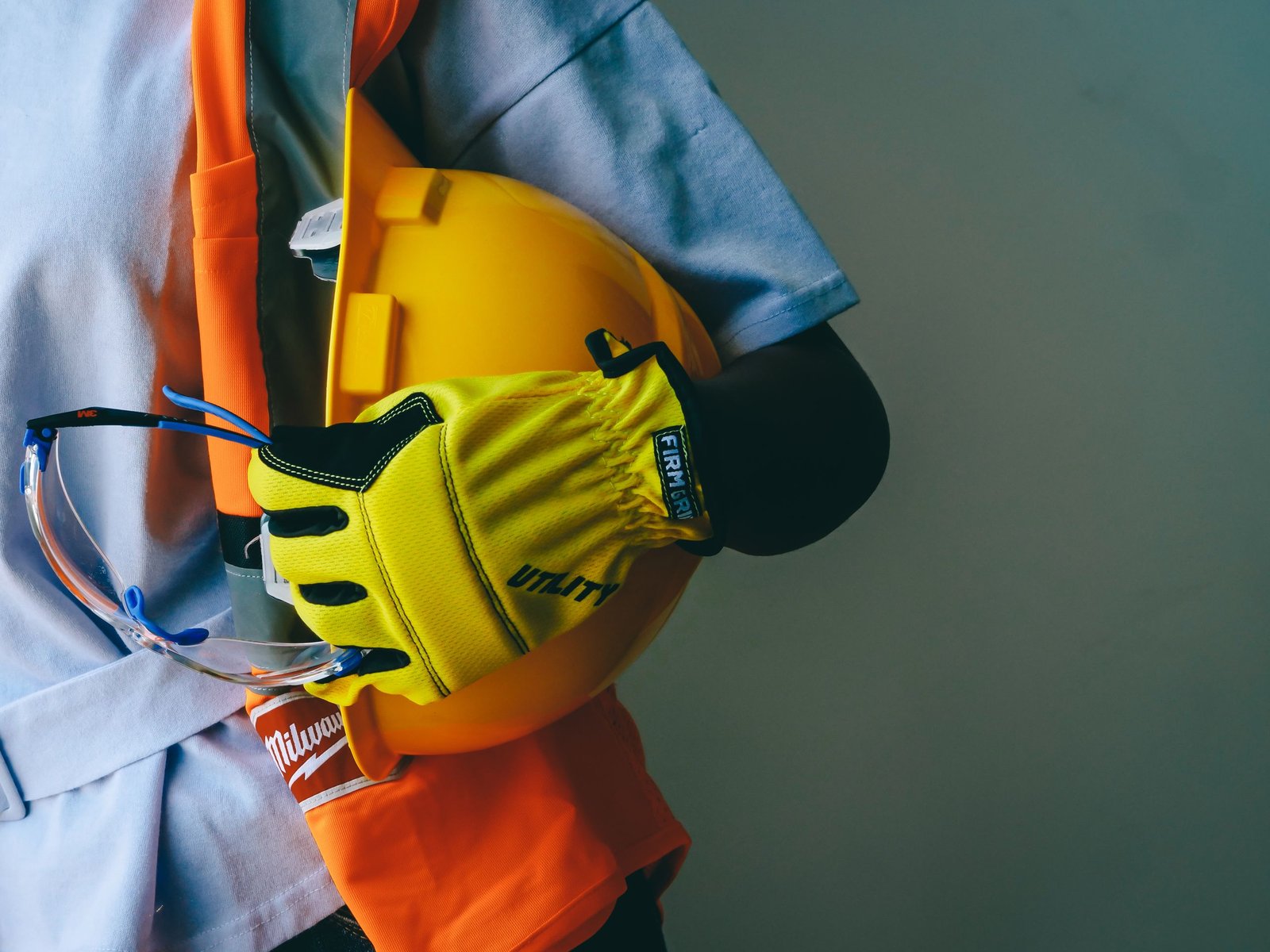
At the final level is personal protective equipment. Depending on the workplace, that could mean gloves, safety footwear, helmets, eye protection, hearing protection or other equipment appropriate to the remaining risk.
PPE can be essential, but the HSE describes it as a last resort within the hierarchy rather than the starting point. It may be required where risks remain after other controls have been considered or implemented.
The difference is easy to understand. A physical barrier protects people without requiring each individual to remember to put it on. PPE depends on the correct equipment being selected, worn properly, and maintained.