
How to Apply for Scholarships in Nigeria Successfully
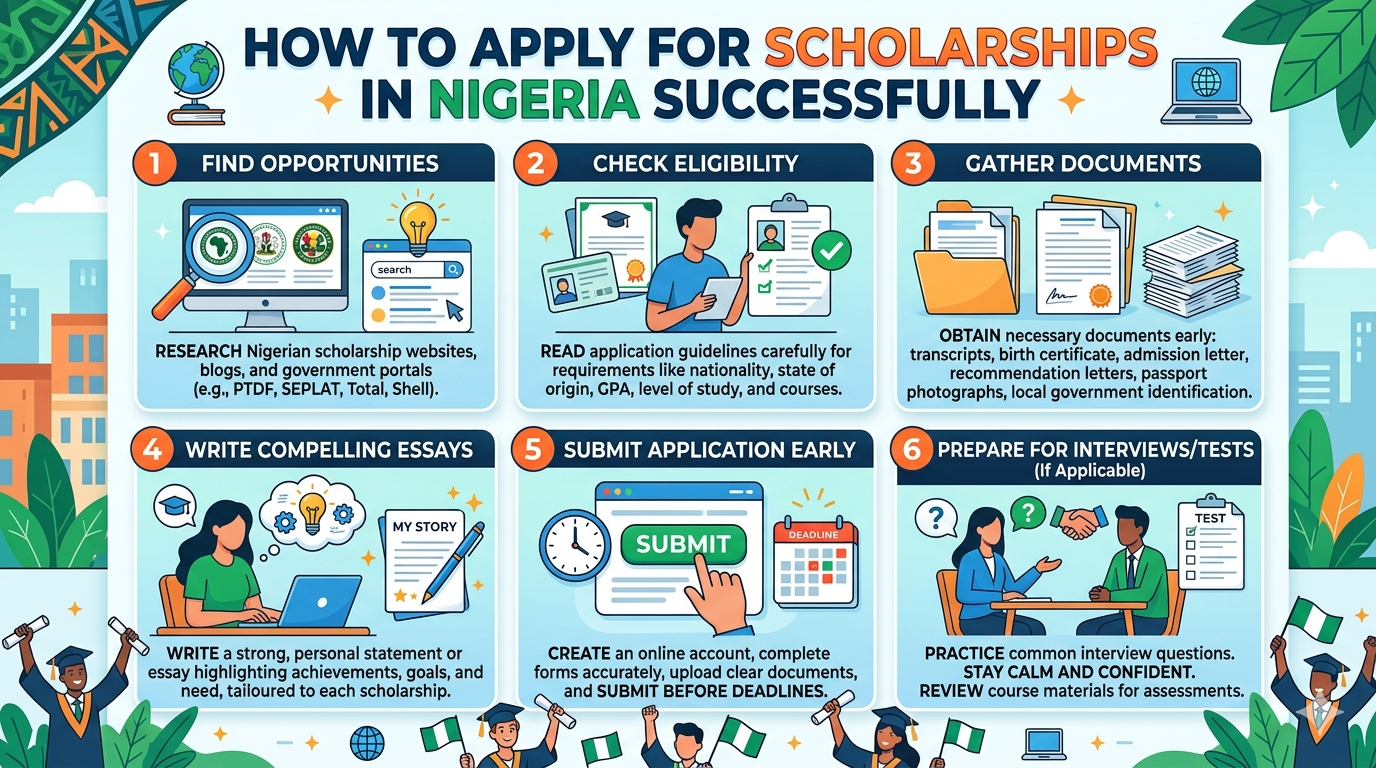
How to apply for scholarships in Nigeria successfully is a question many students now ask as scholarship opportunities become more competitive every year.
Thousands of students apply for scholarships, but only a small number eventually get selected.
While some applicants qualify academically, many still lose out because of avoidable mistakes during the application process.
For many scholarships are more than just financial support. They are opportunities that reduce the burden of tuition fees, accommodation costs, textbooks, feeding, transportation, and other academic expenses. In some cases, scholarships even determine whether a student can continue schooling or not.
The good news is that winning a scholarship is not impossible. Many successful applicants are not necessarily the smartest students in the country. What often separates successful candidates from rejected applicants is preparation, attention to detail, and understanding how scholarship applications work.
Whether you are applying for undergraduate scholarships, postgraduate funding, international opportunities, or private foundation support, learning the right application process can significantly improve your chances.
Read on and learn practical steps on how to apply for scholarships in Nigeria successfully, common mistakes students make, important documents required, and useful tips that can help you stand out during the selection process.
How to Apply for Scholarships: Why Scholarships Are Important for Nigerian Students
The cost of education in Nigeria continues to increase every year. School fees, textbooks, project materials, accommodation, and transportation expenses have become difficult for many families to handle comfortably.
As a result, many students now search actively for scholarship opportunities to support their education.
Scholarships help students:
- Reduce financial pressure
- Focus better on academics
- Avoid dropping out because of school fees
- Gain access to educational opportunities
- Build confidence and academic motivation
- Some scholarship programmes also provide mentorship, leadership training, internship opportunities, and career development support for beneficiaries.
Because of these benefits, scholarship opportunities attract thousands of applicants yearly.
Understanding the Different Types of Scholarships
Before applying, students should understand that scholarships come in different categories.
Knowing the type of scholarship you are applying for helps you prepare better and submit the right documents.
Merit-Based Scholarships
These scholarships focus mainly on academic excellence.
Applicants are usually expected to have:
- High CGPA
- Strong WAEC results
- Excellent JAMB scores
- Outstanding academic achievements
Examples include some university scholarships and corporate scholarships.
Need-Based Scholarships
These scholarships are designed for financially disadvantaged students.
Applicants may need to provide:
- Parent’s income details
- Bank statements
- Financial support letters
- Evidence of hardship
Community or State Scholarships
Some scholarships are available only to students from certain:
- States
- Local governments
- Ethnic communities
Course-Specific Scholarships
Certain organizations sponsor students studying specific courses like:
- Engineering
- Medicine
- Law
- Agriculture
- Computer Science
International Scholarships
These scholarships support students who want to study abroad.
They often have stricter requirements and competitive selection processes.
Understanding the scholarship category helps applicants know what organizers are looking for.
Start Your Scholarship Search Early
One major mistake students make is waiting until deadlines are close before applying.
Most scholarship opportunities have limited application windows. Some close within a few weeks after opening.
Starting early gives you enough time to:
- Gather documents
- Correct mistakes
- Prepare essays
- Get recommendation letters
Know The eligibility requirements
Students who rush applications close to deadlines are more likely to submit incomplete or incorrect information. Know the Scholarship Requirements Carefully.
Every scholarship has its own eligibility conditions. Before applying, carefully read:
- Academic requirements
- Age limits
- Required course of study
- Eligible institutions
- State of origin requirements
- Financial conditions
Do not assume all scholarships are the same.
Some scholarships accept only:
- Federal university students
- Public institution students
- 200-level students and above
- Students with specific CGPA ranges
Applying for scholarships you do not qualify for usually wastes time.
Prepare Important Scholarship Documents
Most scholarship applications require supporting documents.
Students who prepare these documents early often experience smoother application processes.
Common scholarship documents include:
WAEC, NECO, or NABTEB Result
Most scholarship providers request O’Level results with at least five credits.
JAMB Result
Especially important for undergraduate applicants and fresh students.
Admission Letter
Proof that you are officially admitted into an accredited institution.
Student ID Card
Some scholarships request school identification for verification.
Academic Transcript or CGPA Result
Continuing students may need to provide evidence of academic performance.
Birth Certificate
Used for age verification.
Local Government Identification Letter
Some scholarships require proof of state or local government origin.
Passport Photograph
Applicants should use clear and recent passport photos.
Recommendation Letter
This may come from:
- Lecturers
- Religious leaders
- Community leaders
- School authorities
Personal Statement or Scholarship Essay
Some scholarships ask applicants to explain:
- Why they deserve support
- Their academic goals
- Financial challenges
- Future career plans
Use Only Official Scholarship Sources
Scholarship scams have become common in Nigeria. Students should be careful when searching for opportunities online.
Use trusted sources such as:
- Official organization websites
- University portals
- Verified scholarship blogs
- Government education platforms
Be careful of individuals asking for payment before application. Most genuine scholarships are completely free.
Warning signs of scholarship scams include:
- Requests for application fees
- Fake social media accounts
- Suspicious WhatsApp groups
- Poorly written websites
- Promises of guaranteed selection
Always verify scholarship information before submitting personal documents.
Fill Application Forms Carefully
Many students lose scholarship opportunities because of careless mistakes during application.
While filling forms:
- Use correct spellings
- Enter accurate details
- Double-check phone numbers
- Confirm email addresses
- Upload correct documents
Mistakes in contact information can prevent applicants from receiving important updates later.
Avoid rushing through applications.
Write a Strong Personal Statement
Some scholarship programmes require applicants to submit essays or personal statements.
This section is very important because it helps reviewers understand your background and motivation.
A good scholarship essay should explain:
- Your educational goals
- Financial challenges
- Academic achievements
- Leadership activities
- Community involvement
- Career ambitions
Avoid copying essays from the internet.
Most scholarship organizers can easily detect copied content.
Write honestly and clearly.
Highlight Leadership and Community Activities
Many scholarship organizations look beyond academics alone.
Applicants who participate in positive activities often stand out more.
Examples include:
- Volunteering
- Church activities
- Student leadership
- Community service
- NGO participation
- Debate competitions
- School projects
Even small contributions can strengthen your application.
Apply for Multiple Scholarships
One mistake students make is depending on only one scholarship opportunity.
Because competition is usually high, it is smarter to apply for multiple scholarships. This increases your chances of success.
Some students apply for:
- Federal Government scholarships
- MTN scholarships
- State scholarships
- NGO scholarships
- Private foundation scholarships
Winning one scholarship may eventually lead to other opportunities later.
Keep Checking Your Email and Phone Number
After applying, applicants should regularly check:
- Email inbox
- Spam folder
- SMS messages
Many scholarship organizations contact shortlisted candidates through email. Missing interview invitations or verification messages can affect selection.
Use an active email address during applications.
Prepare for Scholarship Interviews
Some scholarship programmes conduct interviews after shortlisting applicants.
Interview questions may focus on:
- Academic goals
- Financial background
- Leadership experiences
- Career plans
- Knowledge about the scholarship organization
To prepare:
- Learn about the scholarship provider
- Practice common interview questions
- Dress decently
- Speak confidently
- Be honest during responses
Confidence and preparation can improve your performance significantly.
Common Mistakes Students Make During Scholarship Applications
Many applications fail because of avoidable errors.
Applying After Deadline
Late applications are usually rejected automatically.
Uploading Wrong Documents
Some students mistakenly upload unrelated or incomplete files.
Providing False Information
Fake CGPA, false financial claims, or manipulated documents can lead to disqualification.
Ignoring Instructions
Failure to follow instructions carefully can affect screening.
Using Inactive Email Addresses
Applicants may miss important updates.
Poor Essay Writing
Weak personal statements reduce application quality.
Avoiding these mistakes can improve your chances considerably.
Tips to Increase Your Scholarship Chances
Here are practical ways students can improve their chances of selection:
Maintain Good Academic Performance
Many scholarships prioritize students with strong grades.
Apply Early
Early applications reduce pressure and mistakes.
Organize Your Documents
Keep files properly named and arranged.
Improve Your Writing Skills
Strong essays can make applications more convincing.
Stay Updated on Scholarship Opportunities
Regularly check scholarship websites and educational platforms.
Be Consistent
Many students apply several times before eventually succeeding.
Best Places to Find Scholarships in Nigeria
Students searching for scholarship opportunities can check:
- University websites
- Government education boards
- Foundation websites
- Corporate organizations
- Scholarship blogs
- NGO education programmes
Popular scholarship providers in Nigeria include:
- MTN Foundation
- NNPC
- SEPLAT
- Federal Government Scholarship Board
- Agbami Scholarship
- NLNG Scholarship
- Private foundations
Students should follow trusted educational platforms for updates.
Final Thoughts
Applying for scholarships in Nigeria successfully requires more than just filling forms online. Students must prepare carefully, understand requirements, organize documents properly, and avoid common mistakes that lead to disqualification.
Scholarships remain one of the best ways for Nigerian students to reduce financial pressure and focus on academic success. While competition can be intense, students who stay prepared, apply early, and present strong applications often increase their chances of selection.
Every successful scholarship application starts with proper preparation.
Even if you do not succeed immediately, continue applying, improving your documents, and building your academic profile. Many students eventually secure opportunities simply because they remained consistent and refused to give up.
With the right approach, scholarships can become valuable stepping path toward achieving your educational and career goals.